At a glance
Pico laser in Gangnam at a glance
- Searching for the best pico laser in Gangnam usually means comparing clinics by device, wavelength and aftercare, and this page lists 5 clinics in the district with what each card shows.
- A picosecond laser fires pulses so short that pigment shatters from pressure rather than heat, which is why it is used for freckles, sun spots, melasma toning and tattoo ink.
- Clinics in Korea usually price it per session or per course, with fractional lens passes and tattoo work quoted separately by area or size.
- The check that matters most: ask which wavelength will be used on your marks and why.
Basics
What is Pico laser?
Pico laser is a family of pigment lasers that emit light in picoseconds, trillionths of a second. At that speed the energy breaks melanin granules and ink particles into fine fragments that the body clears over the following weeks. Less heat spreads into surrounding skin than with older nanosecond lasers, which matters for people prone to darkening after inflammation.
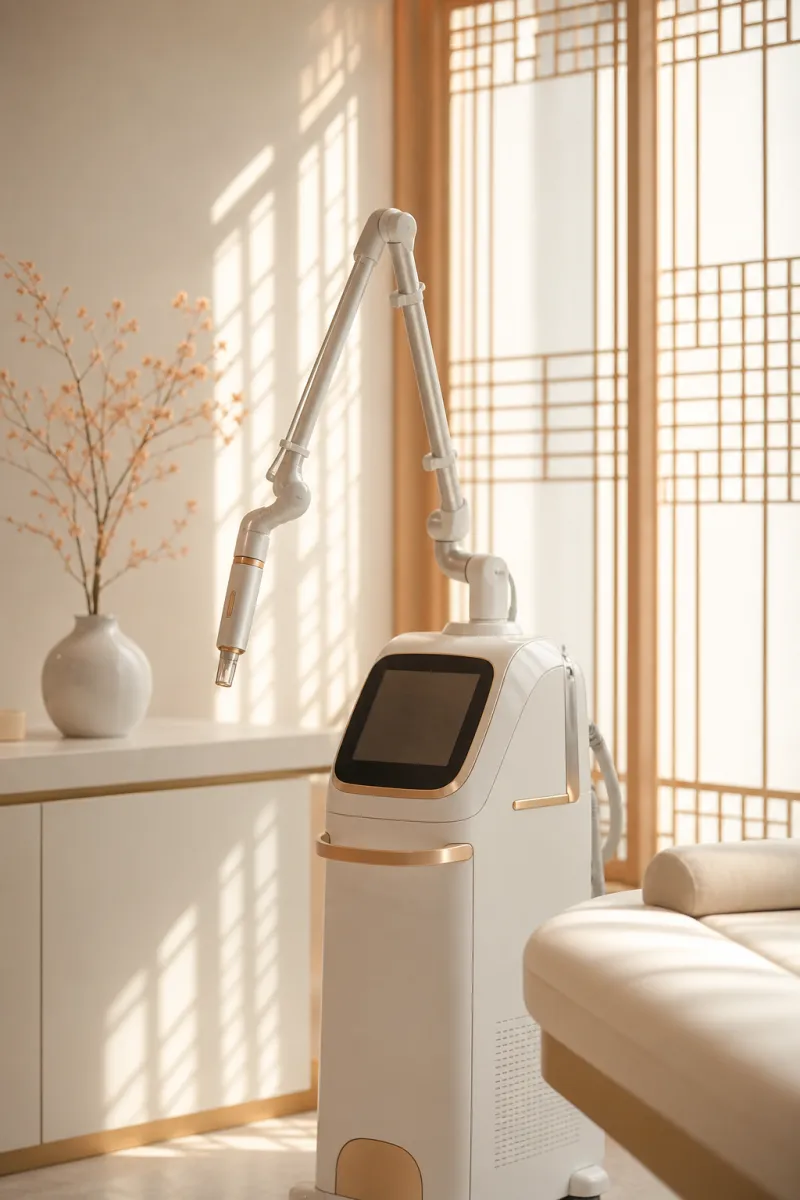
Different platforms carry different wavelengths. PicoSure by Cynosure runs at 755 nm and can be fitted with the FOCUS lens array, which splits the beam into micro points for texture and acne-scar work. Other systems add 1064 nm for deeper or diffuse pigment and 532 nm for superficial brown spots. A 2023 meta-analysis by Feng and colleagues in Lasers in Medical Science pooled six randomized trials on melasma and found that 1064 nm picosecond treatment lowered melasma severity scores without notable side effects, while 755 nm showed no clear advantage over topical lightening agents and sometimes caused post-inflammatory darkening.
Toning, spot removal and fractional passes are separate services, even on one machine, so knowing which one is proposed makes quotes comparable.
Clinics in Gangnam
5 clinics for Pico laser in Gangnam
Every clinic below lists Pico laser among its treatments. Message a clinic directly.

2. RE:BERRY Clinic Gangnam
3. Jiwoo Clinic
4. Aive Clinic
Why Korea
Why people choose Korea for Pico laser
Picosecond platforms are widely installed in Seoul skin clinics, so finding a specific wavelength or lens attachment rarely requires a long search.
Toning sessions leave redness for hours to a few days, which generally fits a short trip, and flying home the same day is generally possible.
Many Gangnam clinics see international patients regularly and prepare written aftercare and consent forms for them.
Clinics usually quote per session or per course before VAT, which makes like-for-like comparison straightforward once the wavelength and pass type are written down.
Who it suits
Who Pico laser suits
- A good fit: people with freckles, sun spots or uneven brown tone who want gradual lightening with short recovery.
- A good fit: people with melasma who accept a course of low-energy sessions and daily sun protection afterwards.
- A good fit: people removing dark professional or amateur tattoos who can return for several sessions months apart.
- Not a good fit: anyone pregnant, with an active rash, infection or open wound on the area, or a fresh tan.
- Not a good fit: people taking photosensitizing medication or isotretinoin without the treating doctor's approval.
- Not a good fit: anyone expecting one visit to clear melasma for good.
Selection criteria
How we chose these clinics
- Device and wavelength: ask for the platform name and the wavelength planned for your marks, and expect a reason tied to the depth of the pigment.
- Diagnosis first: a clinic should separate melasma from freckles, sun spots and birthmark-type pigment before treating, often with a camera or magnifier, because each needs different settings.
- Settings in writing: the quote should name the pass type (toning, spot, fractional lens) and the area covered, so two offers describe the same service.
- Who fires the laser: confirm whether the treating doctor performs the passes or supervises staff, and who reviews your skin at follow-up visits.
- Price clarity: prices are shown before VAT, with 10% VAT added at payment; check whether numbing, soothing masks and aftercare products are included.
- Language and aftercare: written instructions in a language you read, covering sun protection, makeup timing and warning signs of irritation.
- Honest limits: a consultation that explains when not to treat, such as on tanned or inflamed skin, shows the plan fits your skin.
Evidence
Research behind this page
- Efficacy and safety of picosecond laser for the treatment of melasma: a systematic review and meta-analysisLasers in Medical Science · 2023 · doi:10.1007/s10103-023-03744-y
Pooling six randomized trials, the review found 1064 nm picosecond laser reduced melasma severity scores without significant side effects, while 755 nm did not significantly improve on topical agents.
- Efficacy and safety of low-fluence 1064 nm picosecond laser with/without micro-lens arrays for melasma treatment: a randomized, split-face controlled studyLasers in Medical Science · 2025 · doi:10.1007/s10103-025-04655-w
In 30 patients treated five times at four-week intervals, both sides improved, and the micro-lens array side showed lower recurrence at six months and better texture and pores.
FAQ
Questions about Pico laser in Gangnam
Which wavelength is usually chosen for melasma on a picosecond device?
Low-fluence 1064 nm is the wavelength most often used for melasma because it reaches deeper pigment with little heat. Feng and colleagues, writing in Lasers in Medical Science in 2023, found that 1064 nm sessions reduced melasma scores in pooled trials, while 755 nm showed no clear gain over creams and could trigger darkening. Expect a course of several gentle sessions rather than one strong pass, with sun protection between visits.
How can I tell that a clinic uses a genuine picosecond machine?
Ask to see the device and its brand label in the treatment room before you start. Genuine platforms show the manufacturer name on the body and screen, and staff can tell you the wavelength and pulse type. If a clinic cannot name the device or calls a nanosecond laser picosecond, treat that as a warning and compare another clinic on the list before you book a session.
How many visits should I plan for freckles compared with melasma?
Freckles and sun spots often respond within one to a few sessions, while melasma usually needs a longer series. In the 2025 split-face trial by Wu and colleagues in Lasers in Medical Science, patients received five sessions four weeks apart and were followed for six months. Your own number depends on depth, skin type and how strictly you avoid sun between visits, so plan return trips accordingly.
Will my face still look red when I board my flight home?
After low-energy toning, redness usually fades within hours to a few days, and flying the same day is generally possible. Spot treatment can leave small dark crusts that flake off over about a week, and fractional lens passes can cause fine scabbing for several days. Book spot or fractional work early in the trip if photos or meetings come soon after you land.
Is a micro-lens array pass different from standard toning?
Yes, a lens array concentrates the beam into tiny points and targets texture as well as tone. Wu and colleagues reported in 2025 that adding micro-lens arrays to 1064 nm toning lowered melasma recurrence at six months, with one patient relapsing on the lens side versus six on the toning-only side, and improved pores and texture. It can leave more short-term roughness than toning alone.
What written aftercare should a clinic give me?
Expect clear written steps on sun protection, gentle cleansing and when makeup can return. Good instructions also cover which actives such as retinoids or acids to pause, what normal redness looks like, and which signs, such as blistering or spreading darkening, mean you should contact the clinic. Ask for the sheet in a language you read comfortably before you leave the room.
Why do two clinics suggest different settings for the same spots?
Settings differ because clinics weigh pigment depth, skin type and downtime tolerance differently. One may favor gentle toning over several visits to limit darkening risk, while another treats spots directly at higher energy in fewer sessions. Neither approach is wrong by default. Ask each clinic to explain its choice in terms of your skin, then compare how they would handle side effects.
Summary
Final thoughts
Deciding comes down to your profile. A first-timer with freckles may only need one well-planned spot session and clear aftercare. Someone with melasma benefits more from a clinic that maps the pigment first and sets out a gentle course with follow-ups. People on a short trip should favor toning or plan spot work early so crusts have time to settle before flying.
If you are combining treatments, ask how the laser fits around other procedures on the same visit. On a budget, compare quotes only after each clinic has written down the wavelength, pass type, area and what is included. The right clinic is the one whose plan matches your goals, your skin and your time in Seoul.